
This is what the Hormel family has created from one meat and provision store in the 1890s.
From the museum we wandered over to the Hormel Historic House.


They bought what is now the historic house, for $3,000.00.


Lets go inside for a small peek. They lived much like other well off people, so don't be surprised at what you see.
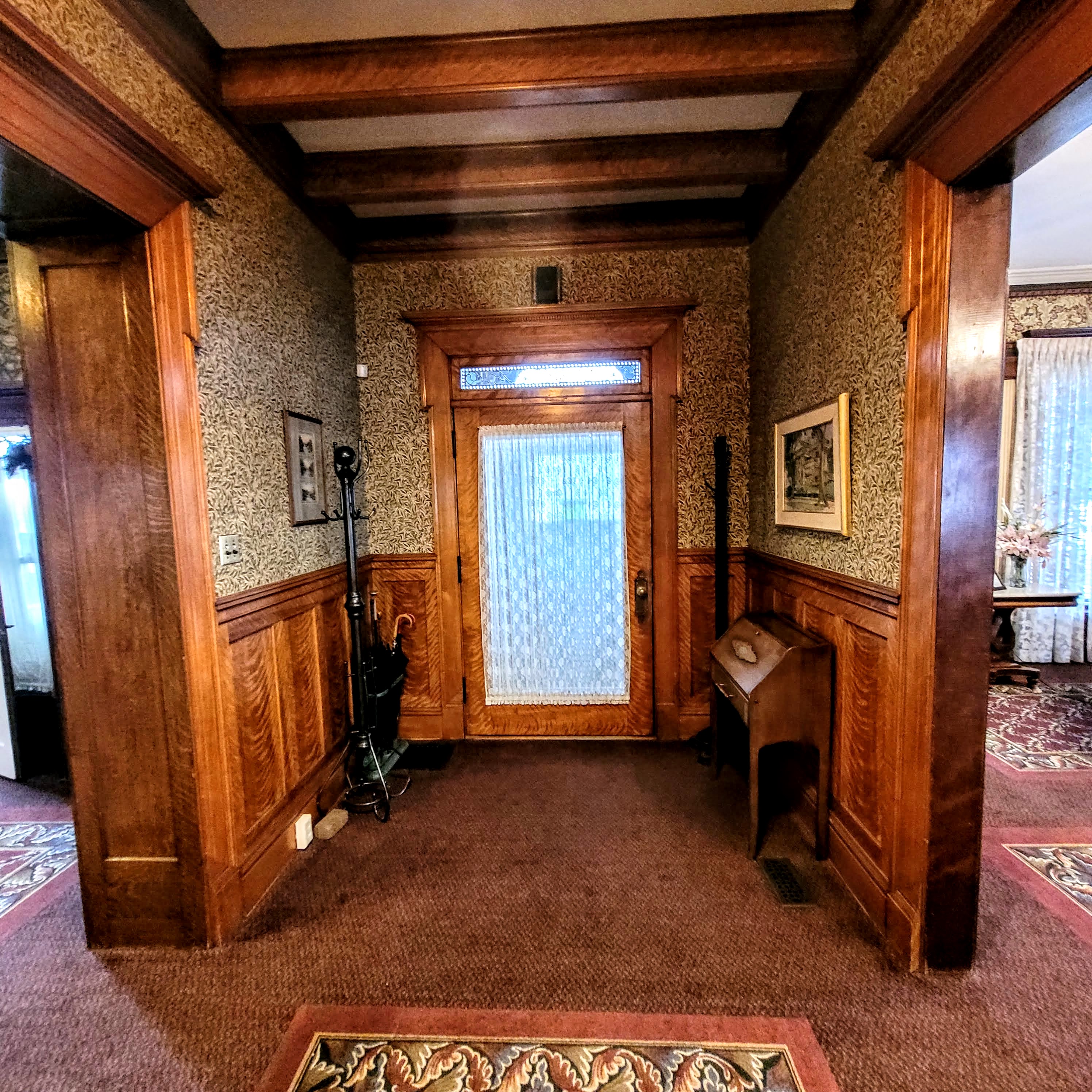

ENTRY

FORMAL ENTERTAINING ROOM

DINING ROOM

BUTLER'S PANTRY

KITCHEN


BREAKFAST NOOK

ATRIUM

GEORGE'S OFFICE
Lets wander upstairs where the sleeping quarters, and servant's quarters are.


 SERVANT STAIRS TO THE KITCHEN

BATHROOM

BEDROOM #1

BEDROOM #2

BEDROOM #3

BEDROOM #4

OVER THE PORCH SUMMER BEDROOM ENTRY

OVER THE PORCH SUMMER BEDROOM
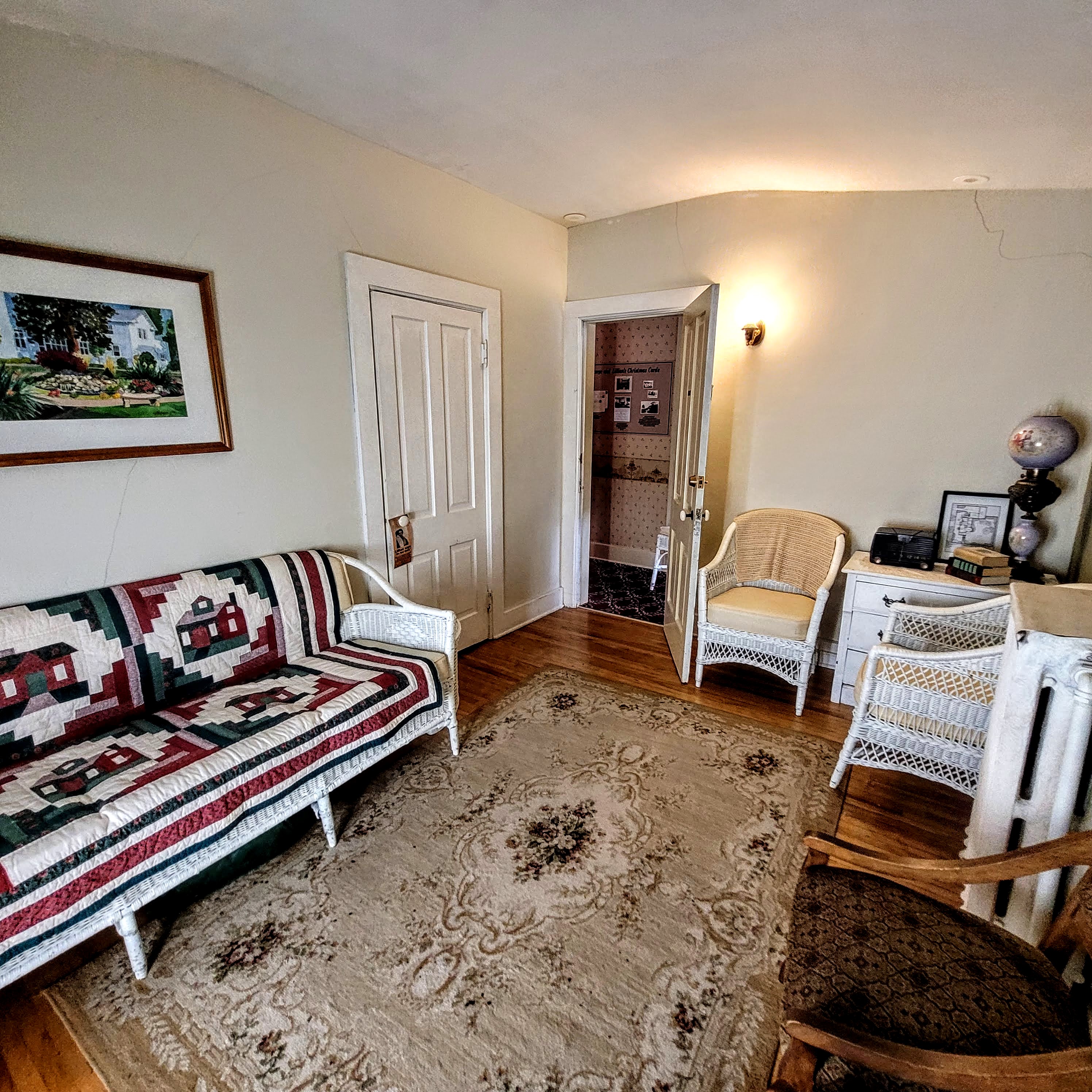
SERVANT'S LIVING SPACE

SERVANT'S LIVING SPACE
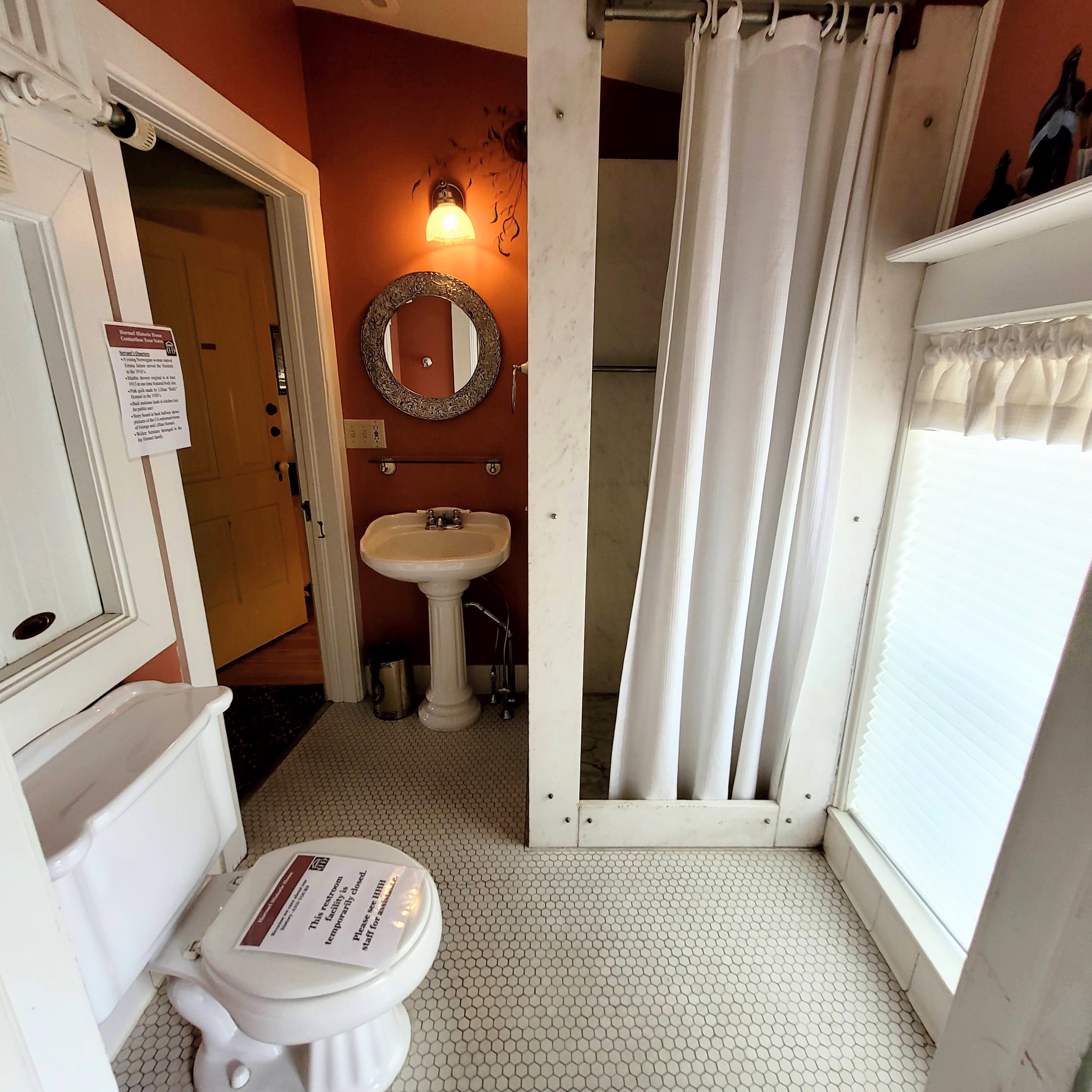
SERVANT'S BATHROOM

The home may appear to be over the top, but the Hormel family was very much about their employees, and the community.
Another day trip found us at the Olmstead County Museum. The big attraction was the Mayo exhibit... but we'll get to that later.
The first exhibit gives the visitor an idea how Minnesota came about. Take a breath, get a cup of your favorite beverage, and we will learn a little more about Minnesota.
Many European powers, as well as the united States were claiming the territory. The first treaty signed by the United States, Great Britain, France, and Spain, was known as the Treaty of Paris, signed in 1783, concluding the American Revolutionary War. The treaty gave the United States the land that made up Minnesota's, northeast, north-central, east-central regions.
In 1803, Thomas Jefferson made the Louisiana Purchase, doubling the landmass of Minnesota. The last portion, the northern border of Minnesota was acquired in 1818, in the Anglo-American Convention of 1818. In 1849, President James K. Polk created the Minnesota territory. In 1858, Minnesota became a state.
Think about the acquisition of the land; did I say anything about the Native American Indian... no. So lets step back just a bit. When the Europeans arrived, the region, to be known as the Minnesota Territory, was split between the Ojibwe (Oh-jib-way), and the Dakota. There were smaller tribes that lived in the region too.
Wellll... the United States thought a bit about land grabbing, and in 1825 signed a treaty, Prairie du Cien (Prairie do-sheen) with the Ojibwe and Dakota tribes, setting aside areas for the Indian Nations. By mid-1800s, multiple treaties were signed between the Native American Indians and the U.S. government, transferring most of the remaining land to the United States.
Back to land grabbing. Despite the treaties, settlers continued to expand, violating the treaties. The Dakota had had enough, and in 1862 we saw the Dakota War. What were they fed up about you ask... the government failed to pay the Dakota their promised annuity, crop failures, and growing hostilities with the encroaching settlers.
I have told you before that cemeteries intrigue me, and we found validation here at the county museum. The first room off to the right looks at death in the county. In our culture today, many people feel that cemeteries are "creepy" places, which is much different than our ancestors of the past.
The Dakota Nation, which was prevalent in the area celebrated the death of a loved one by burning the deceased's clothing, singing songs, drumming, and prayer. Unfortunately their ways were seen in a negative light, and the U.S. government outlawed their ceremonies. It wasn't until 1978 that the U.S. government recognized their ceremonies, through the American Indian Religious Freedom Act of 1978. There is still some difficulties for Native American families to find the resources for traditional burials. Here in Minnesota there is a movement to keep the rituals alive within their culture.
When the Europeans showed up, they brought their own practices. During the Victorian era it was common for friends and families to go to cemeteries for picnics to celebrate departed loved ones, and the community, as well as enjoy nature.
What is the Victorian era? it took place between 1820 and 1912, in the United Kingdom and the United States, defined by the reign of Queen Victoria. Certain mourning practices became more common with the death of Queen Victoria's husband, Prince Albert, in 1861.

This was a typical home viewing during the Victorian era. The "viewing" was a gathering of family and friends before the funeral. The deceased's body was placed in the wicker basket for viewing, then moved to the casket for burial. You want "creepy", the basket was saved to be used again. Also during the viewing, black material covered the mirrors in the house, and all the clocks were stopped at the time of death. Mourning clothing was generally black, or dark material, and was an outward symbol of one's inner feelings. How long did the mourner where black, depended on the relationship to the deceased. A widow was expected to wear black for two years. Other countries wear different colors. For example, India wears white for mourning.

Although embalming has been around since the Egyptians, advances in the U.S. didn't occur until the Civil War. Cremation was also another common practice. Today the technology in dealing with the dead has come a long way. This new method of dealing with dead bodies is called Resomation, sometimes called "water cremation". This is an eco-friendly process where the body is placed in a water, and an alkaline solution, where it breaks the body down to its basic organic elements.
Off to happier places.
How many out there have heard of the Mayo Clinic? I will start at the beginning. Dr. W.W. Mayo and his wife settled in Rochester in the mid 1800s. Settling down only came after his wife, Louise, finally put her foot down after dragging three children from state to territory.

Dr. W.W. Mayo was the type of doctor that found it hard to charge people in need of his care, but his wife had the business senses and managed the finances for his practice.
During the Dakota War Dr. Mayo left his wife and three children in Le Sueur, Minnesota Territory, and headed to New Ulm to set up a hospital to treat the wounded soldiers. While he was away, Louise opened their home in Le Sueur to families seeking shelter after the conflict.
In one instance this is how Louise described being left alone with the children. "When it was necessary for me to go to the barn or the well, I'd put on a pair of overalls and tuck my hair under one of the doctor's old hats. A few days after the doctor left me, refugees began straggling by... I would run to gate and ask, who dressed your wounds? And when they said the Little Doctor, I would know that my husband still lived." The reason she knew that her husband was alive was because of the term Little Doctor, you see Dr. Mayo only stood 5 feet 4 inches.
After the Dakota War ended in 1862, Dr. Mayo joined the Union Army during the Civil War. He was appointed as the examining surgeon for the Union Army for the First Minnesota District, in Rochester. The family didn't join him until 1864.
This is where Louise put that foot down when Dr. Mayo started to get his wandering urges again. Here in Rochester saw the birth of their second son. As the children grew, Louise took on the role as their educator.
As the boys, Will and Charlie, got older, they followed their dad on house calls, and observed him during surgeries. An example of the boys starting their doctor careers early was evident during one of DR. W.W. Mayo's surgeries. While anesthesia was being administered, the assistant administering the anesthesia fainted. Young Charlie climbed up on a box and continued administering anesthesia so the operation could continue.

As for his brother Charlie, he was the opposite, with a friendly personality. Charlie had a mind for mechanics as a teenager, building a steam engine to run a well pump, and turn wheels for the family washing.  1888 rolled around, and off he went to Chicago Medical School for his studies. After completing his studies, he too, returned to Rochester to work with his father and brother.

Lets no forget the Mayo sisters. The sisters, Gertrude and Phoebe, were the oldest of the children.

Gertrude, more often called Trude. In 1877 she married a local veterinarian, was very involved in the Rochester community, and one of the founders of the Civic League in Rochester.
Phoebe, the second born child, spent most of her short life bedridden, due to a carriage accident in her youth.  Phoebe often spoke of what she would do once she got better. Unfortunately, at age 28, she died from complications caused by a splenic disorder (a problem within the spleen). This would affect her brother Dr. Will, who felt guilty that he couldn't help her. Dr. Will eventually specialized in abdominal surgery, which helped many later on.

Time marches on a little, and the Mayo brothers get married, one to a young lady from a local family, the other, a nurse Dr. W.W. Mayo hired to work the his practice.
The Mayo practice was originally known as the Drs. Mayo Clinic, eventually the "Drs" was dropped, they were simply known as the Mayo Clinic.
(PARPHRASED). Now we will talk a little about a hospital. The nuns of the church talked with the Mayos regarding starting a hospital because of all the patients coming for treatment. The hospital would be called St. Mary's. In the beginning the nuns served as nurses and assistants. As more patients arrived from around the world, and technology improved, the hospital grew. A doctor, Dr. Plummer, was instrumental in the design and implementation of a system to effectively track a patients care, and streamlined the process for patients moving between specialty departments. The new hospital also was one of the first to have doctors and specialist located within one facility.
The two brothers had a very tight relationship, they had houses next door to each other. Charlie and his wife lived in the yellow house, and Will and his wife lived in the red house. The brothers would come home and discuss the work of the day at the hospital. There was a SHORT discussion at one time about building a breezeway between the houses, but the wives DID NOT agree to it. Their solution... The rocker was owned by Dr. Charlie. The brothers sat here most nights to discuss the day. Charlie and his wife also enjoyed time in the chair.

If visiting Rochester it is highly recommended that one take a tour of the Mayo Clinic; we did not get the opportunity this trip.
Moving on in the county museum. This part is outside... you ready to roll?

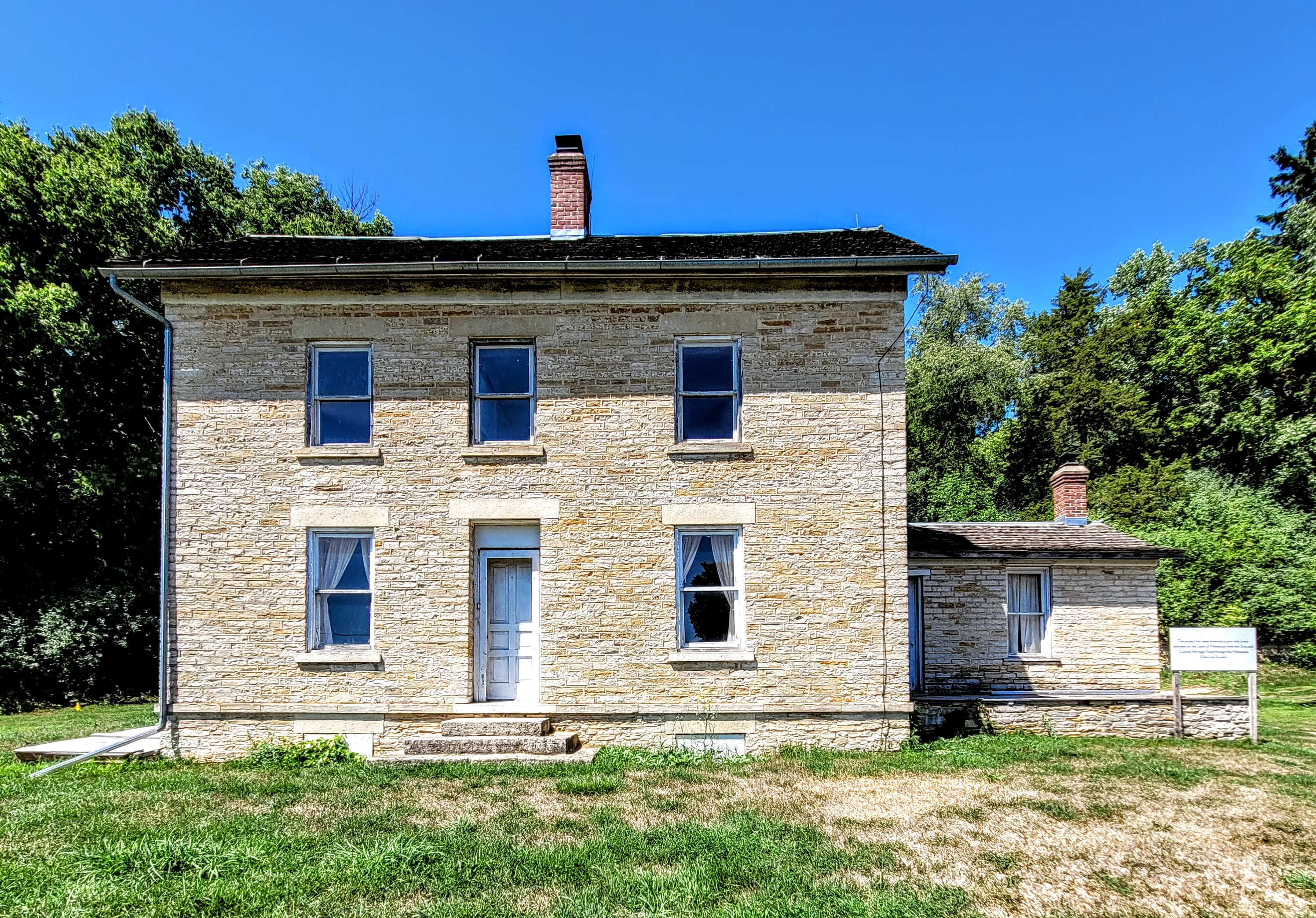


HOUSE CAVE
They later built the house we could not visit right now.
Getting back in the truck we slowly drove over to the schoolhouse.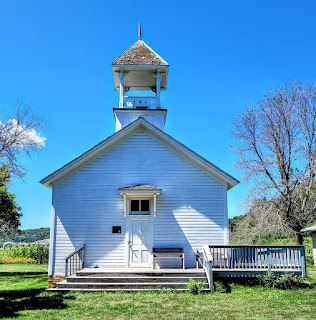 The Hadley Valley School was built in approximately 1885.
 Do you remember...
 OK kids, back in the truck.

This humble little cabin was built in 1862, by the Irish immigrant William Dee. What made this cabin special was the day construction started. Bridget, William's wife, gave birth to their son David. They went on to have three more children before selling it, and moving into larger accommodations.


This humble little cabin was built in 1862, by the Irish immigrant William Dee. What made this cabin special was the day construction started. Bridget, William's wife, gave birth to their son David. They went on to have three more children before selling it, and moving into larger accommodations.

SLEEPING SPACE FOR THE CHILDREN (UPSTAIRS)


After changing hands several times, Andrew Seeverts purchased the cabin in 1900. Mr. Seeverts rented out the cabin to Mrs. Anna Benson Ward, and her four children, from 1907 to 1911. In 1911 there was talk of destroying the cabin, but the Rochester chapter of the Daughters of the Revolution (DAR) spearheaded a campaign to save the cabin. The cabin saw several locations throughout the county, until finally resting at the Olmstead County Historical Society property. Total reconstruction was completed in 1986. The DAR chapter still cares for the cabin.

The day we were there, they were getting ready for an exhibition of steam operated farm equipment. After our visit we headed out to lunch, then back to the trailer.
The next day we took a drive to the Rochester Veteran Memorial, and the Plummer House.
First, the Veteran Memorial.  This memorial is made from large slabs of black granite. All the outer walls have murals, and great information. The walkways have the names of our fallen comrades.


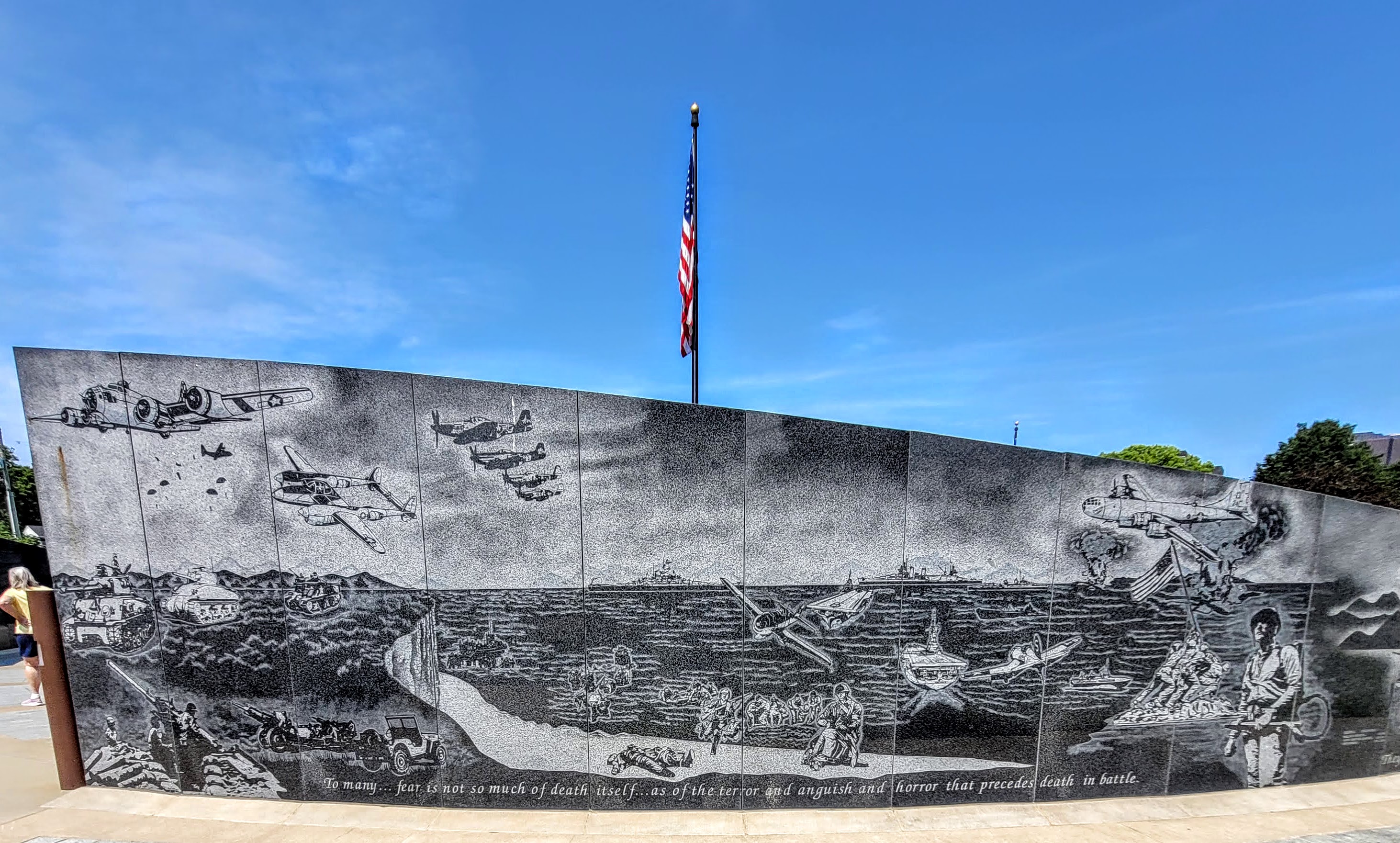


FILLED WITH NAMES OF OUR FALLEN COMRADES

ANGELS OF CARING
This is a memorial for all the medical servicemembers that put themselves in harms way. The inscription on the monument reads: Throughout the history of our nation, brave men and women have given aid and comfort to our troops as they served to project the freedom we enjoy.

INSIDE WALLS

QUIZ TIME:
When did we fly this flag? 1775-1777; known as the Continental Colors. It was the first National American flag, and flown by Navy warships and Army fortresses.

When was this flag flown? 1777-1795; known as the Frances Hopkinson Flag. It is supposed that Frances Hopkinson designed the flag, and Congress adopted in 1777.

Quiz over.
Down the walkway towards the street are a couple of pieces of artillery. This is an Iraqi 57MM gun that was captured during the Persian Gulf War.

Stop number two, the Plummer House. The one thing we did not check was when it was open to the public... Wednesdays only, but we were able to walk around the outside.

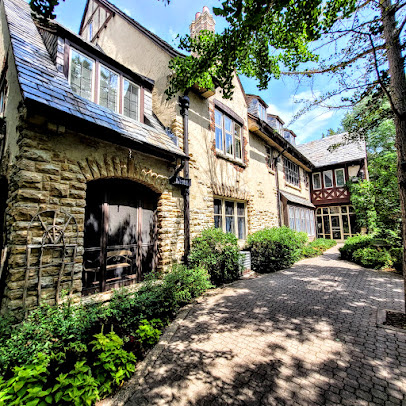
 This mansion comes with its own garden too. The house is used for events now days, and that is why it is only open on Wednesdays to the public.


The garden...


 Carriage house on the way back to the truck.

WALK ENTERING GARDEN

FOUNTAIN ON ONE SIDE

OPEN AREA WITH FLOWERS AND SHRUBS

FOUNTAIN ON THE OTHER SIDE

Time to prep for our journey in South Dakota.


