FIRST OFF IS A DISCLAIMER.
If you started reading the "Empire" post, please re-read it again because I took it down and added to it.

We did manage to scamper from New York between major rainstorms, God is GOOD.
I am finding that state maintained roads are smoother than the state maintained Interstates, making me wonder where the Federal funding for roads goes in most states.

This was a National Guard Armory, built in 1899.

(Courtesy of Sharon Osborne)
Here was the sign we were waiting for:  Carol and I were discussing the last time we were in Vermont. The only time we were in Vermont previously was during one of my work trips to Saratoga Springs, NY. We didn't get to see much... Vermont was closed for the season... it was either late fall or near winter. Come to think of it, it must have been fall, there wasn't any snow on the ground yet.


I have been kidding that these states aren't using enough weed killer, everything is green instead of brown, like the Southwest. You can't tell from the photo, but we left a little rain, here appeared almost dry.
There is a lot of Revolutionary War history in this area, but we will probably check that out later, our goal was to get to the campground before the rain.
We passed through one town that had what I considered the proper name for the town, Rutland. The road had a lot of pot holes, dodge one to hit another. I will give them a little, very little credit, they were trying to repair the road.
The Rutland panhandlers must reserve their corners to beg on. We were thinking that this panhandler went to lunch and put up his reserved sign.

Down the road we continued until we got to the town Brandon, and through it a couple of miles to the campground. Looks like a nice spot and it is, however...
 The front is almost three feet off the ground, and the back is about 10 inches off the ground. The last time we had this type of variance was with the 5th wheel at Lake Washington, in Oklahoma, a few years ago. The front end of the 5th wheel was almost four feet off the ground, and the back was a few inches from the small retaining wall. All is good though.


Again God was good to us, we had no rain while setting up, but it did eventually come. I did manage to get a short walk in before it rained. The next day was laundry day, so I took Carol down to the laundry, and picked her after she was done.
The campground has a lot of seasonal folks, and most of them appear very nice. I met the owner and he is a nice guy too. Some of the seasonal folks visitors must be wary about... like the black bear that has been visiting the campground recently.

WHATCHA LOOKIN' AT
There are quite a few of these guys running around too. I was told to not leave trash out, and watch for racoons. Many time campers forget that they have invaded nature's space, and can be quite careless. The owner was telling me of a female tent camper last year. He told her not to leave her garbage outside her tent because she could end up having a visitor. She did not seem too concerned until the next day when she returned to her tent to find a bear in it... that cured her of not listening the rest of her stay; and her garbage always made it to the dumpster.
The current owner did some major changes when he bought this place. The previous owner was at baseball fanatic, and built a baseball park with bleachers. The current owner had a different idea...  Before he could create these new spaces, he had to raise the area six feet, because of the flooding caused by the beavers and their dam.

We are currently looking at what we can do around here, and most of the trips will be around 40 miles or a little more, so stay tuned.
We wandered out today and ended up at a place a lot of people enjoy...


They want to make sure that visitors measure up for the experience, and apparently we did.


After the short video we moved to an overlook of the production floor, and it was an interesting process. This part of the tour photos were not allowed, for good reason. The plant in Waterbury is the original plant, and has only one assembly line; their bigger plant is located about an hour away in another Vermont town. Because they have gone international, they also have a plant in Holland, in Europe.


Visitors are measured in pints of Ben and Jerry ice cream. The tour is a short one, starting off with a short video about the company. Ben and Jerry started first in an empty gas station scooping ice cream. It didn't just start, they had to complete a course on making ice cream, which cost them $5.00. They did finish the course with a grade of A- on the open book test.

After the short video we moved to an overlook of the production floor, and it was an interesting process. This part of the tour photos were not allowed, for good reason. The plant in Waterbury is the original plant, and has only one assembly line; their bigger plant is located about an hour away in another Vermont town. Because they have gone international, they also have a plant in Holland, in Europe.
Down the stairs we headed to the taste testing lab. 
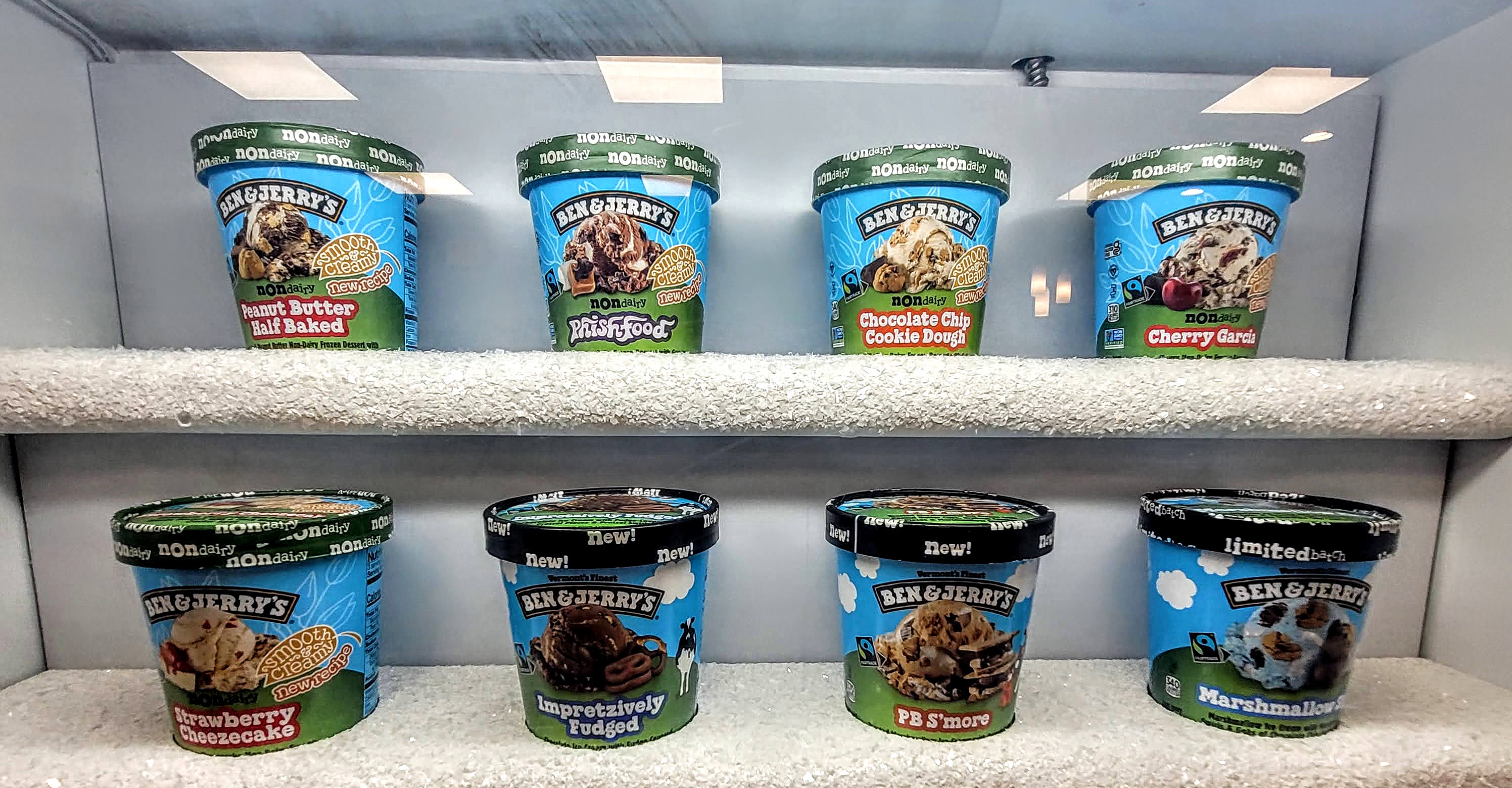
Here we learned what new flavors were coming out for 2024.
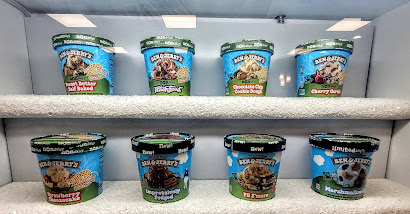
Some of the flavors are new, or a new recipe, non-dairy, and a limited time flavor: 1. Peanut Butter Half-Baked (non-dairy/new recipe), 2. Phishfood (non-dairy/new recipe), 3. Chocolate Chip Cookie Dough (non-dairy/new recipe), 4. Cherry Garcia (non-dairy/new recipe), 5. Strawberry cheezecake (non-dairy/new recipe), 6. Impretzively fudged (new flavor), 7. PB S'more (new flavor), and 8. Marshmallow Surprise (limited time batch). 
This was the original spot where Ben and Jerry worked on their flavors, now someone else handles the flavor tasting in the lab. One of the flavors the current flavor creator created was Vermont Maple Walnut... which can only by tasted at this plant.
The original plant can only produce one flavor at a time, and today they were producing Chunky Monkey. The tour guide told us that it can take anywhere between 8 and 20 hours to clean and sterilize all the equipment before they can start the next flavor.
After the tour we stopped in the gift shop for my lapel pin, and Carol bought a puzzle and a bumper sticker. After we shopped we went outside to buy some ice cream, and get out sample tasting of the Maple Walnut ice cream.
Now, let me back track a bit on getting to Ben and Jerry's. The drive was a short of 50 miles and took over an hour to get there. Ms. Garmin took us on some roads that are considered highways; some of them were at excessive speeds of 40 mph, all the way to 50 mph. Finally she got us on the Interstate where we could do 65 mph. Coming back home we took a different way that allowed us to travel at 55 mph most of the way.
We needed to stop for real food to aid the ice cream in digestion. One side of the place we stopped at was a pub, the other side was a grill.
Here is an oddity we saw going to Ben & Jerry's, and stopped on the way back.

This eating later in the afternoon really hampers dinner, which usually turns into possible breakfast.
Made it through another night, and off we went for another adventure. Today's adventure involved a lot of driving and hours. One thing we have already learned, distance does not equal time, again it was an hour and a half to go 60 miles.
TAKE A BREAK AND REFILL YOUR DRINK OF CHOICE.
Our first run was south to the New England Maple Museum.


The story of maple syrup should probably start with an Iroquois legend. The legend goes like this: While Woksis was out hunting, his squaw was preparing dinner from thought-to-be "rain water" conveniently gathered beneath the broken limb of a maple tree. Woksis smelled the sweet aroma from far away and knew something especially good was cooking. The water had turned into a thick syrup which sweetened the meal with a delicious maple flavor.
The story of making maple sugar is displayed on the walls of the museum; the murals were painted by two local artists.

It first began with gathering the sap. This was done in the spring when the Indians would leave their villages and set up "sugaring camps". They would slash the maple trees with their tomahawks and let the sap run down a wood chip or reed into a wood or bark container. The sap was then carried to a moosehide storage tank.

Next the sap was boiled. Before the 1700s, this was accomplished using hollowed out logs. Obviously the hollowed out log could not be put on a fire, so red-hot stones were dropped into the sap, heating it up. This was done until the sap boiled into a syrup. During the cold nights the water on the syrup would freeze, and in the morning would be thrown away; the water did not hold much of the sugar.

There is a story told that one year the Ojibwa (pronounced Ō-jib-wā) tribe of 1500, produced 90 tons of sugar. Some of it they traded, but most of it was for their use, using it as a salt substitute.
In late spring the Indians would travel down the New England rivers, dealing with settlers and fur trappers, bartering their sugar for items the settlers made, and trappers caught. Remember, before 1700s, sugar was a rare and expensive commodity. With the rise in coffee and tea consumption, so grew the desire for sugar. By 1800, it was a regular part of the diet.


It began around 1690 when a French missionary to the Abnakis, named Sabastien Rasles recorded the settlers first attempt at making maple sugar.
In the mid-1700s the English taught the Indians a different way to boil the sap, they could boil it over a fire using a copper, brass, or iron kettle. They also showed them that the ash or basswood troughs could be replaced with large-bottom buckets that sat on the ground.
Keep in mind that back in the day, the maple forest was virgin territory, meaning they were everywhere. Back then sap was not drawn from trees unless they were 24 inches in diameter. What they would do is tap the tree using an axe, and this was done as late as the 1860s. The problem with using an axe, it scared the tree, and reduced the trees life.
So lets talk about how they improved the method for extraction of the sap from the tree.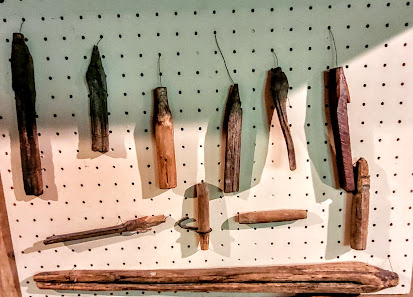 That's right, wooden taps were created (started up in Canada). Drilling a hole in the tree appears to do less damage to the tree, keeping it productive longer. The early 1800s saw taps that were handmade, whittled to a size that would fit the bore hole, and long enough to allow sap to drain into the bucket. By 1860, the taps were mass produced from birch, turned by lathe, and drilled.

As technology grew, so did the method in which to store the sap...


TWO FORMS OF SAP STORAGE TANKS
New methods were developed to retrieve the sap from the forest and get it to the boiling kettles. Mobile collection tanks were created, and pulled by horse or oxen.

OPTION #1 SAP GATHERING TANK
These tanks made it easier, but still could be tough at times to collect the sap, and that's because the weather could leave two inches of snow, or two feet of snow, and at the end of the season there could be just about the same amount of mud.
OPTION #2 OX CART
(fan not included)
I mentioned that the season wasn't long... ooh, ya say I forgot to mention that... well I'm sayin' it now. It was generally only about six weeks.
The "Sugar Makers" have what they call a "last run", which generally occurred in the shady regions of the sugar bush (an orchard of maple trees 40 years and older) that are exposed to the northern winds. Cleanup activities have already started in the sunnier areas where the trees are already budding.
The end of the season comes when all the spouts, buckets, and tubing are hauled down the mountain and stored in the "Sugar House". When they store the buckets, they store them upside down, do you know why? it is to prevent the hoops from loosening and falling off.
What is a "Sugar House", it is where the sap is brought and boiled into syrup. This shelter houses the evaporation system which replaced the kettles for boil down.
The entire evolution is very labor intensive, including the boiling process, the syrup can be ruined if the level gets too low. True maple syrup is graded for quality purposes, and Vermont's maple syrup is some of the highest graded syrup.
This may seem out of sequence, but I'm going to share how these Sugar Makers begin the process:
THE WHAT TO TAP:
1. No tree under 10 inches in diameter is tapped.
2. A budding tree will produce bitter syrup.
3. A "hard" maple produces a sweeter syrup.
THE HOW TO TAP:
1. 7/16 fast cutting wood bit.
2. 3 inches deep in good wood.
3. slant hole slightly upward.
4. New hole to be 6 to 8 inches from previous hole.
5. Remove wood shaving and drive in sap spout ( do not pound in, it splits the wood) until it is in tight enough to hold a sap bucket.
THE WHERE TO TAP:
1. Belt high, or 2 to 3 feet off the ground.
2. Warm side of the tree is favored.
3. Rule of thumbs for number of taps:
2 taps on 15-19 inch trees
3 taps on 20-24 inch trees
4 taps on 25+ inch trees
THE WHEN TO TAP:
1. Depends on weather and location.
2. When the trees have lost the leaves.
3. Sap will flow each time there is freezing night followed by a 40 degree day.
4. Rule of thumb for dates:
West and south of NY (1- 21 Feb.)
Southern New England and NY (21-28 Feb.)
Southern Vermont/New Hampshire & Central NY (1-7 Mar.)
Northern NY, VT, and NH and Maine (7-14 Mar.)
So how's that for science.


This is the boiling system that has been used the past hundred years, with very minor changes.
The "last season" run usually produced a syrup the Sugar Makers called "Black Strap", which isn't good for anything but baked beans, and beer. 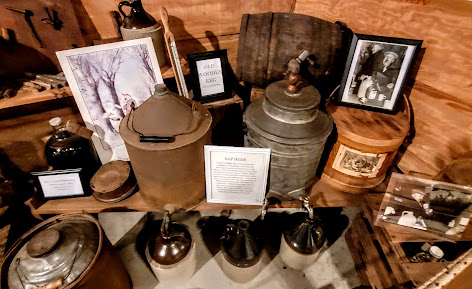
What they would do is reduce it half way down to maple syrup-sweet, but water-like consistency. It went into a barrel with hops, yeast, and whatever else they wanted to add. It sat in the barrels until July, which was the haying season. Back then this beer was known as Sap Beer, today we might call it a Maple Beer.

What they would do is reduce it half way down to maple syrup-sweet, but water-like consistency. It went into a barrel with hops, yeast, and whatever else they wanted to add. It sat in the barrels until July, which was the haying season. Back then this beer was known as Sap Beer, today we might call it a Maple Beer.
If your a numbers kinda person, have at it:

Q: How long do you think it takes to fill a 16 quart bucket?
A: Two drips per heartbeat, which equates to 8 hours to get 16 quarts.
Q: How much sap does it take to make a quart of maple syrup?
A: four, 16 quart buckets.
Are you getting a better understanding where true maple syrup coats what it does. By the way manufacturers of true maple syrup must list where the syrup came from.
Before we go out to the tasting area let me give you health fanatics a run down on true (pure) maple syrup:
First off, if it is pure syrup, there should not be ANY ADDITIVES.
1. Vitamins: B2, B3, B5, B6, and Biotin
2. Minerals: Calcium, Potassium, Manganese, Magnesium, Phosphorus, Iron, and Zinc
3. Amino Acid (building block K for protein)
4. 40 calories per tablespoon (corn syrup 60 cal., honey 45 cal.)

Into the tasting room we go, this is where we saw the different grades of syrup. Besides the maple syrup, they had some other items for tasting, not really related to syrup, so we'll stay with the syrup here.
Fancy Grade A: (light amber color). The bouquet is delicate; good for topping desserts.
Grade A: (medium amber color). There is a pronounce maple flavor; this is your pancake and waffle syrup.
Grade B: (dark amber color). Robust flavor enhanced by carmel taste; pancakes, waffles, etc. Used for cooking.
Grade C: (dark color). Strong taste; used for cooking.
We were Grade B kinda people, so we brought some home. The manufacturer of the syrup we bought doesn't make the Grade C. I'm thinking this grade might be your baked beans, or something wanting a molasses flavor.
From here we headed up to a chocolate shop, 60 miles away. This place is a little further north than Ben and Jerry's was, which gave me the photo opportunity I saw the day before.


THIS IS WHAT HAPPENS WHEN YOU FORGET WHY YOU ARE GOING FOR A RIDE

MULTPLE FIRE HYDRANT FOR THE 4 ALARM FIRE

VERMONT NUT-FREE CHOCOLATES
From there we headed to the Lake Champlain Islands for lunch. To get to the islands drivers must take "Sand Bar" bridge. On the way across the lake, drivers can stop about mid-way to take pictures... and we did.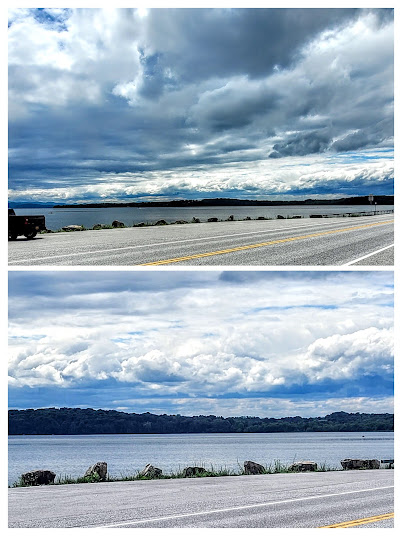

The pub we stopped at had decent food, but what made Carol and Smile was a piece of their menu: Read the line just above "All burger patties are a full 1/2 pound!

ADARONDAK MOUNTAINS, NY

GREEN MOUNTAINS, VT

Time to head home.