I feel like I am creating "Rocky 59, it Never Ends". With the 4th of July weekend upon us, we chose not to do a lot... except tour Washington Island.
In an earlier post I mentioned doing a little recon on Washington Island, so we did it. It was a beautiful day for it too. How many of you remember Miss Muppet sitting on her tuffet... There was a bench to sit at, and it was surrounded by spiders like this, fortunately they were not aggressive, just enjoying the sun.


After we pulled out from the dock, we headed north towards Washington Island, passing the infamous "Death's Door" passage. Death's Door, home of more than 200 shipwrecks. The captain steered us port (left) a bit so that we could get a good look at another operational lighthouse
 This lighthouse, on Plum Island is no longer manned after the mid 1970s. The lighthouse in the photo is the rear range of Plum Island. There are several lighthouses on this island. The first lighthouse bult on the island in 1849, unfortunately too far in in passage to be of great value, and mariners still had issues navigating Death's Door passage.


Bottom photo courtesy of Andrew Apollo
Because the Plum Island lighthouse was not doing its job, they abandoned it and built another lighthouse on Pilot Island in 1858.
Because it was a government job, the Pilot Island lighthouse didn't prove to be much better than the old Plum Island lighthouse. Always remember the government's motto... there is always enough time to do it wrong twice. (did I type that out loud, oops)
Around the late 1880s a sailing captain who traveled the passage quite a bit, proposed range lights be built on Plum Island. Our speedy government only took until 1895 to approve the idea, with construction beginning in 1896.


The brick structure by the lighthouse is the Keepers house. The Keeper had the south side and upper floor of the house; one Asst. Keeper lived upstairs on the north side, and the other Asst. Keeper lived on the 1st floor of the north side.
The next two photos are the fog signal building, boathouse, and oil storage building.
Once we crossed the harbor channel it was time to time up at Detroit Harbor, on Washington Island. I mentioned earlier that our tour of the island would be by tram... This was our tram, two cars pulled by an SUV. History of the early island settlers begins with a bunch of Scandinavians moving to the island to farm. For you people that like shopping, the tour does stop at the mall for some shopping, but first we passed Washington Bay.
 The tour driver was giving the islander prospective on how they see us, a 30 minute ferry ride from the mainland. The island is over 35 square miles in size, with over 100 miles of roads throughout the island. Why so many roads? 718 permanent residents, plus the tourists in the summer, which increases the population to nearly 1600 when the rental cottages are filled.


Brace yourself, we are now going to stop at the mall to do some shopping.

The big building in the first photo is the candy, swimming, souvenir, hardware, clothing, paint, and food snack store. The other building is handmade crafts from the locals. Leaving here we headed into downtown Washington; I couldn't get my camera ready fast enough to take a photo of downtown. I did see a grocery store, couple of bars, realtor, newspaper office, and a couple of eateries.


Leaving town we headed for the next tour stop, the Stavkirke Church.

Before we enter the church lets discuss the name. Stavkirke refers to the use of vertical posts; the term "stav" means pole or support.
 This church is a replica patterned after the Borgund church, in Norway, built in 1150A.D.. The project was started in 1991 by local carpenters, and a large group of volunteers. The main portion of the church was dedicated in 1995 as a Christian house of worship. In 1999, the bell tower and dragon heads were added.
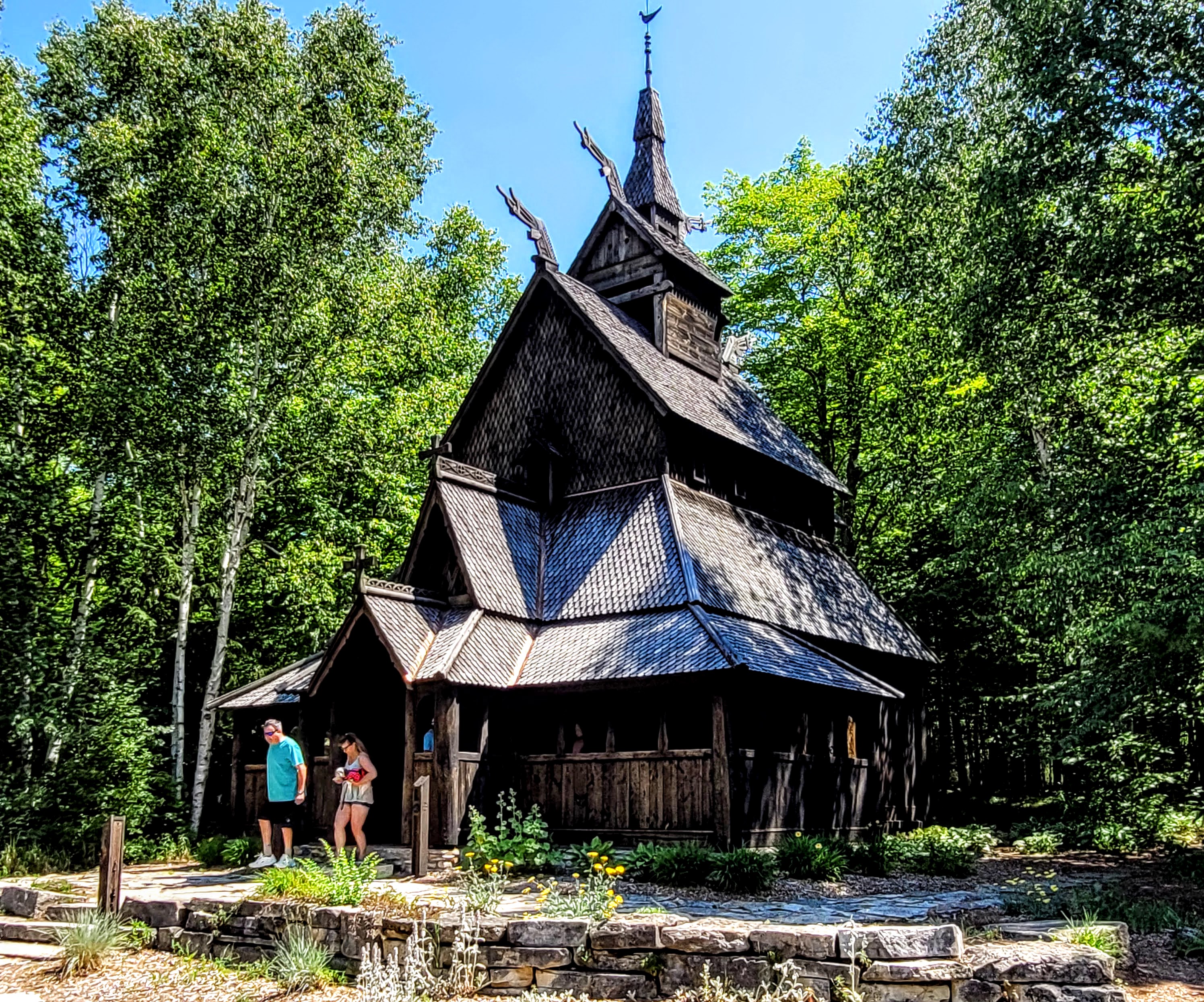

Before we enter the church lets discuss the name. Stavkirke refers to the use of vertical posts; the term "stav" means pole or support.


At the time the original church was build in the mid 1100s, paganism was giving way to Christianity. The carvings are a blend of pagan and Christian symbols.
Our next stop on the tour is a farm museum representing what life might have been in the earlier days on the island. The first thing I want to say is that it is a working horse ranch, with other animals too. I was able to get a picture of the working horses... As you may notice, some of the horses were comfortable with humans around. The other livestock...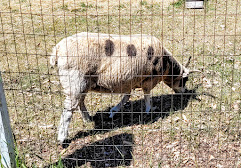
 Visitors can feed the livestock, for a quarter per serving. Around the farm are other buildings that were located on the island from days gone by.


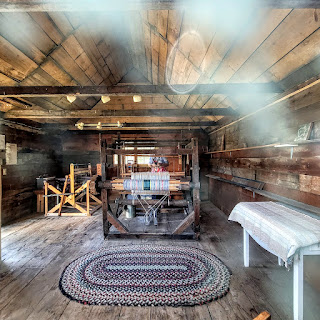


TYPICAL FAMILY LIVING SPACE

WEAVING BUILDING

INSIDE WEAVING BARN

BARN
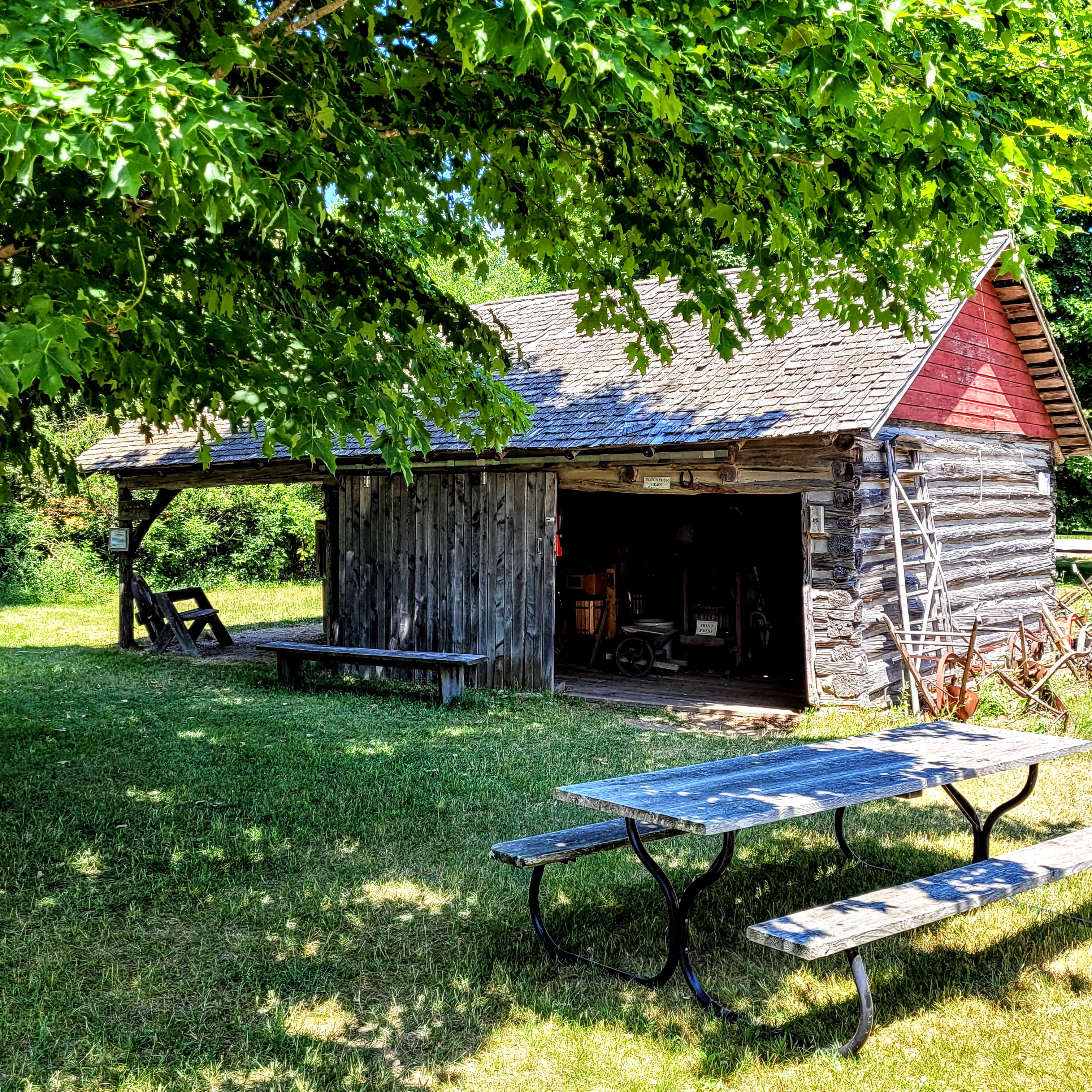
CIDER PRESSING BARN

INSIDE PRESSING BARN
Anyone know what this piece of farm equipment is?
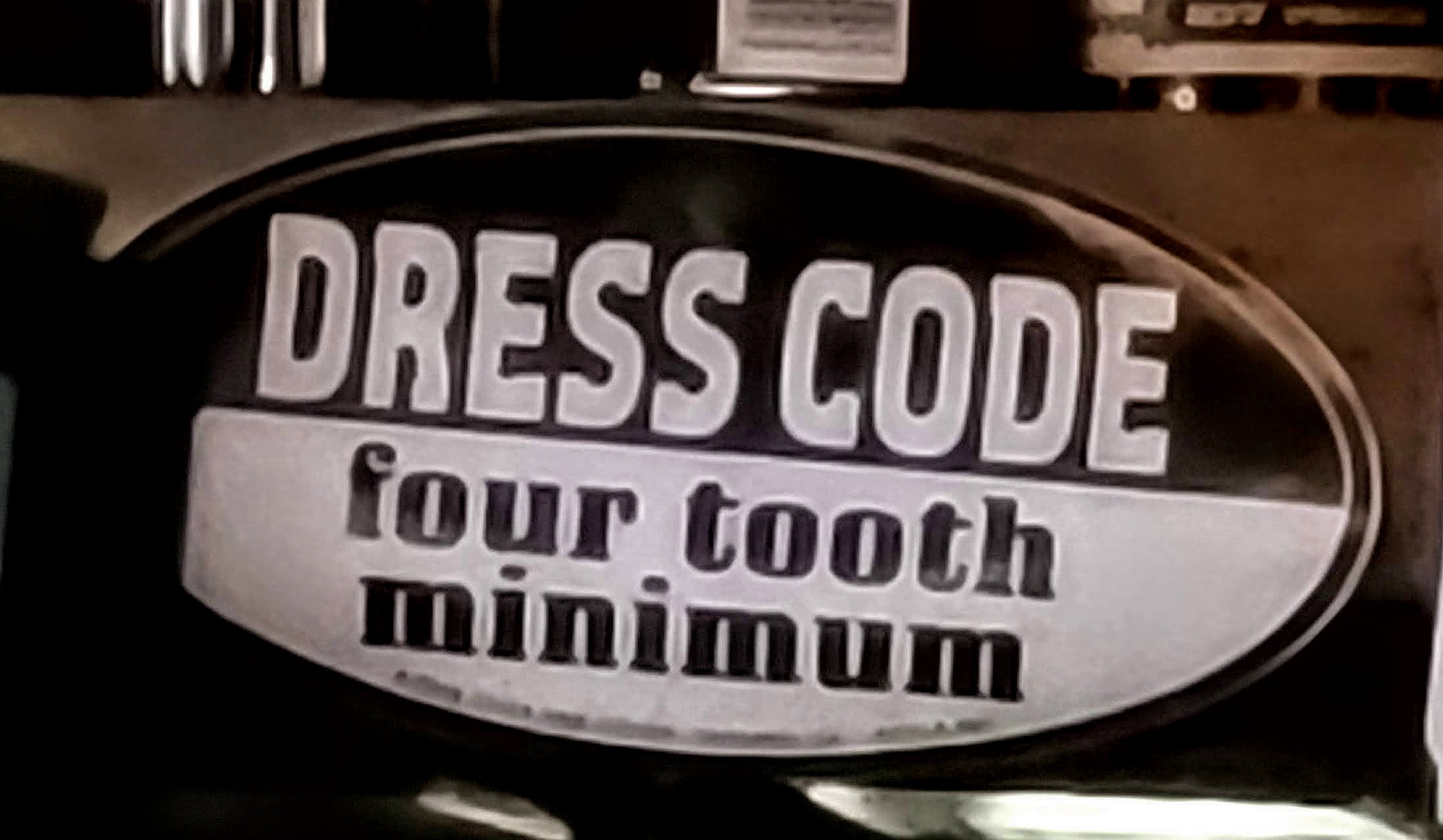
 This was a good place to stop for lunch, mainly because I stopped so a car could back out of the parking lot to enter the road. As you might guess, this gave me a sign that I should take his parking spot, and have lunch there. This place is an upper crust kinda place, they have a dress code...
 Fortunately Carol and I met their dress code, so we sat down and had lunch.


USED FOR PLANTING CORN CROPS
Our last stop on the tour was Schoolhouse Beach. Apparently it is a tourist destination on this island. The selling point to the beach is the smooth rocky shore. Smooth rocks are still tough to walk on without water shoes. The reason the beach got its name was because the schoolhouse was located really close to the water.  Because winters were pretty harsh near the shore, with a lot of freezing temperatures and icing, the school was moved up the hill. This new schoolhouse later became a church, and an addition was added to the left side of the building. From the last stop we scurried back through downtown so that we could catch our ferry back to the mainland.
We made it back intact, and ready for lunch.
On the way back we stop at Mink River Basin...

We made it back intact, and ready for lunch.


TEMPURA FRIED SHRIMP

DEEP FRIED WHITEFISH
Last night was the 4th of July, and there were fireworks all around us, some of them we could see...

Made our preps for departure today, stopping at Piggly Wiggly, and Waseda Farms. Waseda Farms is a local working farm that sells meat, veggies, eggs, and dairy products, plus they have a looky-loo zoo, no petting or feeding though.


You will be happy to know that the Sturgeon Bay series has come to an end, we are heading closer to Fond Du Lac.


